
Cataracts and Astigmatism
What is Astigmatism?
Forty percent (40%) of the population has 1 diopter (D) or more of astigmatism. Correcting it at the time of cataract surgery is generally advisable to improve results and reduce dependence on corrective lenses after surgery. An astigmatic cornea is football-shaped or oval causing light to be focused into two points. Uncorrected vision is blurred and corrective lenses are required. The goal of astigmatism surgery is to modify the cornea so its shape is made more spherical or implant an astigmatism-correcting toric intraocular lens (IOL). With either approach, light is focused onto the retina as one crisp point.
There are several methods to correct astigmatism that can be considered each designed to reduce or eliminate astigmatism!
Astigmatic Keratotomy (AK) – Scleral Recession
Richard A Erdey, MD has developed this simple, effective method as an alternative to limbal relaxing incisions, Toric Intraocular lenses, or Laser Vision Correction to reduce or eliminate astigmatism as a stand alone procedure or combined with cataract or EVO ICL surgery. The cataract incision is modified and placed at the steepest part of the cornea. The cornea relaxes and flattens making the cornea less oval or football shaped (astigmatic) and more spherical. The effect is monitored under an intra-operative keratometer allowing additional adjustments to be made to improve the result. Remove your cataract, reduce astigmatism and reduce dependence on corrective lenses IN ONE CONVENIENT SITTING!

Before: cornea oval. astigmatism steep at 90 degrees
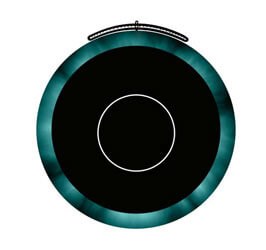
After: Cornea spherical. Astigmatism neutralized
Learn More: Scleral Recession (long scleral tunnel) to reduce astigmatism
Astigmatic Keratotomy (AK) – Limbal Relaxing Incisions
Astigmatic Keratotomy (AK) is a modified form of Radial Keratotomy used to reduce astigmatism. Tiny, precise scratches are made on the cornea surface in a specific location in accordance with the steepest curve of the cornea. These scratches flatten the steepest part of the cornea. This makes the cornea more spherical (baseball shaped) and thus sharper retinal focus is obtained. This procedure takes just a few minutes to complete and can be performed alone or in conjunction with cataract surgery or Visian ICL implantation.
Toric Intraocular Lenses (IOLs)
Toric Intraocular Lenses (IOLs) can be used to reduce astigmatism at the time of cataract surgery and may reduce the need for corrective lenses. Bifocals or reading glasses may still be required. These devices are capable of correcting larger amounts of astigmatism than astigmatic keratotomy techniques. Drs. Erdey, Searcy and Kaswinkel use a ring illuminator during cataract surgery for more accurate IOL alignment.
Laser Vision Correction (LASIK, PRK)
Laser Vision Correction (LASIK, PRK) can be used to reduce residual astigmatism after cataract surgery. The procedure can be performed weeks, months or years after the initial cataract procedure.
Cataract Surgery in Columbus Ohio
Exciting new options are available for cataract surgery in Columbus Ohio at the Erdey Searcy Eye Group. We’ve developed some new techniques to make your vision outcomes even better after cataract surgery. We’ve implemented new techniques for dealing with astigmatism, we’re offering new choices in premium lens options, and even started new protocols in dropless treatments post surgically to decrease the chances of complications after surgery. Thank you for visiting! We hope to make your vision care a WOW experience you won’t soon forget! We know that there are few things more important than your sight.
Over three million cataract procedures are performed each year in the United States, making cataract surgery the most commonly performed surgery in our Medicare population in Columbus Ohio. Cataracts are a natural part of the aging process. You will develop a cataract if you live long enough, though cataracts can occur at birth or at any age. A cataract is a cloudy area that develops on the lens of the eye, blocking light to the back of the eye, resulting in changes in one’s vision. These changes can include cloudy, fuzzy or filmy vision, changes in the way you see colors, increased glare from headlights, lamps or the sun, frequent changes in your eyeglass prescription, and double vision.
Annual eye examinations are important to your overall eye health and also play a vital role in detecting the presence of cataracts. Initially, early cataracts can be treated with stronger spectacles to improve your vision. However, this improvement may be temporary if the cataract progresses with time.
Cataracts can be removed with a brief, outpatient procedure once the loss of vision adversely affects your activities. The opacified crystalline lens of the eye (cataract) is removed and replaced with an artificial intraocular lens. As a secondary benefit of this surgery, some of our patients are also able to reduce or eliminate their dependence on corrective lenses.
- State-of-the-art diagnostics.
- Eye-drop-only anesthesia. Typically NO long needles or patches required.
- Advanced no-stitch rapid rehabilitation technique.
- Discover our new “Dropless” technique – no drops required after surgery!
- Intraocular lenses to reduce presbyopia, astigmatism, spherical aberration are available.
- Possibly reduce or eliminate dependency on eyeglasses.
Our team of physicians together with the staff at our facility, East Columbus Surgery Center offer you vast experience in performing cataract surgery in Columbus, and Newark-Granville, Ohio. You can be assured that you or your family member will receive unsurpassed care by the very best in the field. If you suspect you may have a cataract, please contact us for an eye examination. We offer our patients several options to reduce astigmatism and a choice between standard and advanced intraocular lenses.